Common dental decisions · DENTALVIEW GUIDE
Wisdom tooth removal: where to go, and when oral surgeons and CT matter
Where to have a wisdom tooth removed depends on whether it is straight, sideways or buried. KDCA evidence explains how to check for an oral and maxillofacial surgery specialist, when CT is considered, and which symptoms after removal call for a dentist right away.
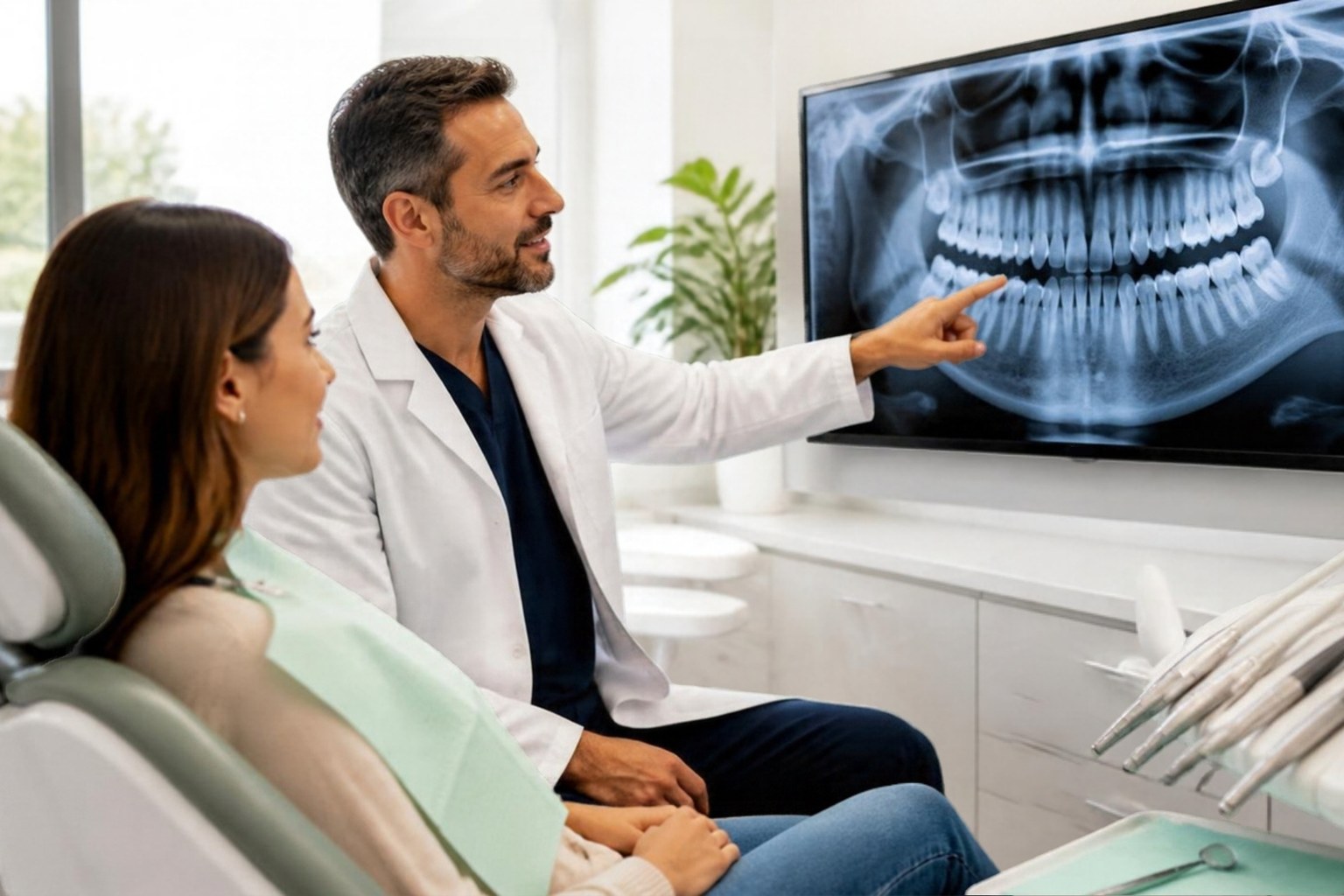
- The KDCA says a wisdom tooth that has come in straight, is used for chewing and is kept clean does not have to be removed. It leans toward removal for teeth that lie sideways, are partly covered by gum, or keep causing inflammation.
- For a sideways or buried wisdom tooth, first ask about the operating dentist's specialty, experience with similar impacted teeth and referral arrangements when surgery is judged difficult.
- CT is considered when the panoramic image suggests that the roots are close to the nerve canal or strongly curved. If it is recommended, ask whether the result would change the surgical method or the need for referral.
- After extraction, swelling is worst on the second day, and pain or swelling that grows after three days, or a mouth that stays hard to open, should raise suspicion of infection. The KDCA says that if the face swells a lot, swallowing is difficult, or there are chills and fever, you should go to a dentist at once rather than wait for the appointment.
Choose where to have the tooth removed according to its direction, depth of impaction, distance from the nerve canal and expected scope of surgery. A straight tooth and one buried in gum or bone require different procedures and risk checks.
Whether to remove the tooth, who performs it, when CT matters, what recovery looks like and what to ask at consultation are grounded in KDCA clinical guidance and imaging research. Original visitor reviews are presented only as examples of individual experience, not as guarantees of the same result or evidence for rating a clinic.
01.Does a wisdom tooth always have to come out, and how do straight and sideways teeth differ?
A wisdom tooth that has come in straight, works like a molar and is kept clean does not have to be removed. The KDCA portal separates this case too, and adds that because the tooth sits at the very back, is hard to clean and traps food, some people choose to remove it as a precaution. By contrast it leans toward removal for a tooth that lies sideways and affects the molar in front, or that is partly covered by gum and prone to repeated inflammation.
Around age 20 is described as relatively easy with good healing. A buried tooth gets harder with age as the surrounding bone hardens and the chance of general illness rises, so if a dentist recommends removal, delay is not favored. Yet when a tooth sits deep in the bone and nerve injury after removal is judged likely, leaving it in place is also an option, so whether to remove it has to be decided with a dentist after looking at the images.
If it already hurts a lot or is swollen, inflammation around the tooth is likely, and the described order is to calm the inflammation first and then remove the tooth. Removing it while inflammation is severe may heal poorly and let the infection spread, and the portal also warns that holding on with over-the-counter anti-inflammatory painkillers can end in an emergency if it worsens.
- Ask the dentist to point out on your panoramic image whether your tooth is straight, sideways or buried.
- Ask whether watching without removal is possible and which symptoms should bring you back.
- If it is swollen or painful now, confirm whether inflammation is treated first and when the removal would be scheduled.
One case from a visitor review
Told at an orthodontic consultation that the wisdom tooth had to come out, and had it removed the same day
개방교합 때문에 교정상담 받으러왔다가 사랑니 발치가 필요하다는 얘기를 듣고 당일에 바로 사랑니 발치를 했어요 솔직히 좀 쫄았는데 진심 하나도 안아팠어요 추천합니다~ 교정도 하려고요 구디에서 드디어 좋은 교정치과 찾은 거 같아요 굿~English translationI came for an orthodontic consultation because of an open bite, was told a wisdom tooth had to come out, and had it removed that same day. Honestly I was a bit nervous but it truly did not hurt at all. I recommend it~ I plan to do orthodontics here too. I think I finally found a good orthodontic clinic in Guro Digital Complex area, good~
Official sources for this sectionKDCA National Health Information Portal: Wisdom tooth
02.Where should an impacted wisdom tooth be removed?
A sideways tooth or one buried in gum and bone is closer to surgery than to an ordinary extraction, so what to check first is who operates and with what experience rather than which clinic it is. According to the KDCA, most impacted wisdom tooth removals proceed through gum incision, bone removal, splitting the crown, extraction and suturing, and difficulty depends not only on the angle but on the number, length and curve of the roots and the distance to the mandibular canal that carries the nerve.
A name such as dental clinic or dental hospital cannot tell you this experience. HIRA clinic information shows whether an oral and maxillofacial surgery specialist is registered, but that is an institution-level declaration and does not mean that person will operate on you, so when booking, ask directly about the surgeon's specialty and how many similar impacted teeth they have removed. This is not advice to avoid places without such a specialist; the standard is whether you are shown the risk of your own tooth on the images and told what happens if it is judged too difficult.
- At booking, ask about the surgeon's specialty and experience with similar impacted teeth.
- If the HIRA specialist declaration and the clinic website's staff page differ, keep the two figures separate and ask who will actually perform the surgery.
- Ask in advance what the clinic does if it judges the surgery too difficult, including whether it refers you elsewhere.
One case from a visitor review
Told that a lower impacted wisdom tooth had thick roots
친구 추천으로 여기서 사랑니 발치했습니다! 인터넷에서 사랑니 발치 후기 보고 너무 무서웠는데 치과선생님, 치위생사 분께서 정말 친절하게 안정시켜주셨어요ㅠ 아래가 매복니에 뿌리가 굵어서 어려웠을텐데 치과쌤께서 포기 안하시고 끝까지 덜 아프게 발치해주셨어요🥺 발치 후에 설명도 친절하게 해주시고 거즈,얼음팩 주십니다~!English translationI had my wisdom tooth removed here on a friend's recommendation! I had read wisdom tooth removal reviews on the internet and was really scared, but the dentist and the hygienist calmed me very kindly. The lower one was impacted with thick roots, so it must have been hard, but the dentist did not give up and removed it with less pain to the end. After the removal they also explained kindly and gave gauze and an ice pack~!
Related readingHow to read registered dental specialist counts
Official sources for this sectionKDCA National Health Information Portal: Wisdom tooth / HIRA medical institution detail service
03.If told the tooth is close to the nerve, must you have a CT scan?
A CT is not always required; the KDCA guidance is to add a CT when, on the panoramic image, the roots of a lower wisdom tooth are close to the mandibular canal that carries the nerve or are strongly curved. Because the canal holding the inferior alveolar nerve runs under the roots of lower wisdom teeth, the portal explains that when the tooth is very close, feeling in the lower lip, chin, lower front teeth and gum can become temporarily dull after removal.
Abnormal sensation arises in roughly 0.6 to 5 percent after lower wisdom tooth removal, about 2.6 percent from the inferior alveolar nerve and about 0.6 percent from the tongue nerve. The share that recovers on its own is 96 percent for the inferior alveolar nerve and 87 percent for the tongue nerve, usually within one to two months, but it can last nine to twelve months or recover slowly, so the portal advises having it examined from the start if sensation feels wrong.
That does not mean a CT for every wisdom tooth protects the nerve. A review published in BMC Oral Health in 2022 pooled seven randomized trials covering 1,144 lower wisdom teeth and concluded that CT should not be used routinely, because the evidence that adding it to panoramic imaging reduces nerve injury was weak. It allowed CT to be considered only when the panoramic image shows warning signs such as contact with the nerve canal and 3D imaging could change the surgical approach, and it added that radiation exposure and cost must be weighed too.
Reading the two sources together changes the question. It is more accurate to ask how close the tooth looks to the nerve on your own panoramic image, and whether a CT result would change the surgical method or whether you would be referred elsewhere, than to ask whether a CT is taken.
- Ask the dentist to point out on the panoramic image where the roots and the nerve canal appear to meet.
- If a CT is recommended, ask whether the result would change the surgical method or the clinic.
- If a CT is not recommended, ask why, and hear in advance how abnormal sensation would be handled.
- Check the CT fee and whether insurance applies as a separate line item on the estimate.
One case from a visitor review
Postponed for years after two other clinics only explained risks, then was shown the nerve position on 3D images and had it removed the same day
회사 근처에 있는 다른 두 곳의 치과에서는 '발치 후 안면마비 가능성', '뿌리가 휘고...고난이도..'(신경이 지나가고 있고 어쩌고...) 등 원론적인 리스크만 이야기를 하길래 몇 년 동안 마지막 사랑니 발치를 미뤘었네요.
* 이샘치과에서는 '3D로 보니, 신경이 지나는 걸 피해서 발치 가능'하다는 긍정의 뷰를 제시!
* 진료 상담 후 당일 바로 발치, 시간 절약.
* '우두둑, 뚝뚝' 등 예상했던 소리도 안들렸는데 어느새 깔끔하게 발치 끝!!
발치 후 3일째인데, 통증도 거의 없이 잘 아물어 가고 있는 것 같네요. 감사합니다!English translationThe other two clinics near my office only talked about general risks like 'possible facial paralysis after removal' and 'curved roots, high difficulty' (with the nerve running through and so on), so I put off removing my last wisdom tooth for years.
* At this clinic they gave a positive view: 'looking at it in 3D, it can be removed avoiding where the nerve runs'!
* Removed the same day right after the consultation, saving time.
* I did not even hear the crunching sounds I had expected, and before I knew it the removal was neatly done!!
It is day three after removal and it seems to be healing well with almost no pain. Thank you!
One case from a visitor review
Worried after hearing the last wisdom tooth was close to the nerve, on top of a fear of dentists
가산이샘에서 연계해서 구로이샘으로 왔습니다
제 하나남은 사랑니 신경이랑 가까이있다해서 걱정마니했는데 의사선생님이 식사하시고 사랑니만 계속 뽑으시는걸로 유명해서 금방 끝났어요. 저는 치과공포증이 있어서 많이 무서워하고 겁도 많은데 선생님들이 많이달래주셨고 친절하세요. 덕분에 잘뽑은거같아요!English translationI was referred from the Gasan branch to the Guro branch. I was very worried because my one remaining wisdom tooth was said to be close to the nerve, but the doctor is known for eating a meal and then pulling only wisdom teeth, so it was over quickly. I have a fear of dentists and get very scared, but the staff soothed me a lot and were kind. Thanks to them I think it was taken out well!
Related readingCBCT capacity versus your own examination
Official sources for this sectionKDCA National Health Information Portal: Wisdom tooth / BMC Oral Health 2022 systematic review on adding CBCT to panoramic imaging before lower wisdom tooth surgery (Robbins et al.)
04.After removal, which symptoms are normal and which need a dentist right away?
Swelling, pain and difficulty opening the mouth are common reactions after surgery, and pain or swelling that grows after three days, or a mouth that stays hard to open, should raise suspicion of infection. Swelling is usually worst on the second day after removal and then fades, while pain peaks three to five hours later and is mostly hardest on the day of surgery.
The signs that call for a dentist at once are specific too. If the face swells a lot and the mouth will not open, or swallowing is difficult and the back of the throat hurts with chills and fever, the advice is not to wait for the booked date, and the same goes for pain that stays severe despite medication. Sharp pain and a bad smell about three to five days after removal point to dry socket, which the portal says needs a dentist's prescription and careful cleaning.
At home, bite firmly on gauze for about thirty minutes, swallow the blood and saliva in the mouth instead of spitting, and avoid straws and touching the site with the tongue or fingers. For the first one to two days apply a cold pack to the cheek for ten to twenty minutes and rest five to ten minutes, repeating for two days, and avoid chewing on that side for about a week. For upper wisdom teeth, a hole into the maxillary sinus can rarely form, and for a large one the portal says to avoid sneezing and blowing the nose for three to four weeks.
- Keep the aftercare instructions as a photo or in writing, and ask which symptoms mean you should call before the appointment.
- Confirm when the stitches come out and whether a disinfection visit is needed.
- For an upper wisdom tooth, hear separately what to do if nose or sinus symptoms appear.
One case from a visitor review
Wrote that following the aftercare rules after the first removal went well, then had all four removed, the other side ten days later
10일 후 재방문해 실밥 풀고 반대쪽 사랑니까지 발치했습니다. 여기서 사랑니 졸업했어요..! 위아래 2개씩 총 4개 발치했습니다. 모두 프로페셔널하게 진료해 주셔서 큰 걱정 없었습니다. 첫 발치 후 주의사항을 잘 지켰더니 염증 없었고 통증, 붓기 없었습니다. 오늘 발치도 주의사항 잘 지키면 큰 문제 없을거 같습니당 신기했던게 아래 매복니였는데 쪼개지 않고 온전한 상태로 발치하셨어요! 그리고 치과쌤, 치위생사쌤들 바빠 보이시는데 정말 친절하십니다😢 사랑니 발치에 대한 공포가 큰 분들께 추천드립니다~! 치과 선생님, 치위생사 선생님 모두 감사합니다🥺❤️English translationI came back ten days later, had the stitches removed and the other side's wisdom teeth taken out too. I graduated from wisdom teeth here..! I had four removed, two upper and two lower. Everyone treated me so professionally that I had no big worries. After the first removal I followed the aftercare rules well, and there was no inflammation, no pain and no swelling. I think today's removal will be fine if I follow the rules again. What amazed me was that the lower one was impacted, yet they removed it whole without splitting it! And the dentist and hygienists look busy but are really kind😢 I recommend it to people who are very afraid of wisdom tooth removal~! Thank you to the dentist and all the hygienists🥺❤️
One case from a visitor review
Came back on an appointment after removal and was told why it hurt
사랑니 발치후 예약후 방문
오늘도 친절하고 왜 아픈지 설명도 잘 해주셔서
좋았습니다.English translationVisited on an appointment after wisdom tooth removal. Again today they were kind and explained well why it hurts, which was good.
Official sources for this sectionKDCA National Health Information Portal: Wisdom tooth
05.If fear is making you put it off, what should you confirm at the consultation?
Fear is not a criterion for choosing a clinic but information to say at the first consultation. The KDCA says that when there is a systemic condition such as high blood pressure, diabetes, ischemic heart disease, liver impairment or corticosteroid use, or when the body's state has changed as in pregnancy, removal is decided in discussion with the dentist, so along with how afraid you are, mention your medicines, existing conditions and any possibility of pregnancy first.
It also says to check for wisdom teeth and consult in advance if long-term dental care will be hard to get, if you are planning a pregnancy, or before starting radiotherapy or some drug treatments. Ask about the anesthesia and sedation method, the dates for disinfection and stitch removal, and whom to contact if a problem occurs. If sedation is used, also ask who monitors breathing, oxygen saturation and blood pressure, the discharge criteria after recovery, and the rules for an escort and driving.
Costs are easier to compare when the estimate separates examination, imaging, removal, anesthesia or sedation, disinfection and stitch removal. Because the scope of treatment varies with the tooth, also confirm insurance coverage and the expected total at the consultation.
- At the first consultation, say first how afraid you are, and tell them your medicines, conditions and any possibility of pregnancy.
- Ask about the anesthesia method, whether sedation is used, and if so who monitors you.
- Confirm the dates for disinfection and stitch removal and how to reach the clinic if a problem arises.
One case from a visitor review
Cried from nervousness while having a wisdom tooth removed for the first time
처음 사랑니 뽑아봤는데 다들 엄청 친절하시구 무서워서 많이 울었는데 손 잡아주신 슨상님 많이 긴징하고 우니까 웃겨주신 슨상님들 죄송하고 감사함미다🥺 다음 사랑니두…여기서🥺English translationIt was my first wisdom tooth removal and everyone was very kind. I was so scared that I cried a lot, and I am sorry and thankful to the staff who held my hand when I was nervous and made me laugh when I cried🥺 I will have the next wisdom tooth done here too🥺
Related readingComparing implant surgery methods: navigation, flapless, immediate placement and conscious sedation
Official sources for this sectionKDCA National Health Information Portal: Wisdom tooth
What should you compare in wisdom tooth consultations?
Ask about the tooth, operating dentist, imaging, removal method, aftercare and cost in the same order at each consultation so differences in the scope of the explanations are easier to see.
| Criterion | Before the visit | At consultation | Interpretation limit |
|---|---|---|---|
| State of the tooth | Whether it looks straight, sideways or buried on the panoramic image | Ask to have it pointed out on my own image | Ask the dentist to explain the panoramic findings and expected scope of removal. |
| Remove or not | Pain, swelling, food trapping, repeated inflammation | Whether watching is possible and what to watch for | A straight tooth need not come out, but a buried one is described as harder with age. |
| Surgeon and specialty | HIRA specialist declaration and the clinic website's staff page | The surgeon's specialty and experience with similar teeth | Confirm the reported staffing and the actual operating dentist separately when booking. |
| Imaging | Whether a panoramic image is taken and when CT is advised | The tooth-to-nerve distance on my image and whether CT would change the method | Ask both why CT is recommended and how the surgical plan may change afterward. |
| Removal method | Likelihood of gum incision, bone removal and tooth splitting | Expected duration, whether stitches are used, and the date they come out | Difficulty depends on root shape and nerve distance, not only the angle. |
| Aftercare | Aftercare instructions and how long medication is prescribed | Which symptoms mean contacting the clinic before the appointment, and how | Swelling peaks on day two and growth after day three raises suspicion of infection; there are set reference days. |
| Cost and anesthesia | Whether the estimate lists examination, imaging, removal, anesthesia or sedation and disinfection separately | Whether each item is charged separately and who monitors if sedation is used | Item scope differs by clinic, so compare like items rather than totals alone. |
What to verify
Ten questions to ask verbatim
- Can you point out on my panoramic image whether my tooth is straight, sideways or buried?
- Is watching without removal possible, and if so, which symptoms should bring me back?
- It is swollen or painful now; is the order to calm the inflammation first, and when would removal be?
- Is my case one that needs a gum incision, bone removal and tooth splitting?
- What is the operating dentist's specialty, and how many similar teeth have they removed?
- How close do the roots and the nerve canal look on my image?
- If you recommend a CT, would the result change the surgical method or the clinic; if not, why not?
- If the surgery is judged too difficult, what do you do here, and do you refer to another hospital?
- After removal, which symptoms mean I should call before the appointment, and when are the stitches and disinfection?
- Does the estimate charge examination, imaging, removal, anesthesia or sedation and disinfection separately?
FAQ
FAQ
Should a wisdom tooth be removed at a general dental clinic or an oral and maxillofacial surgery clinic?
A straight wisdom tooth may need only a routine extraction, while a sideways or bone-impacted tooth may require an incision, bone removal and tooth splitting. Ask for an explanation of the expected scope on the panoramic image and, when booking, ask about the actual operating dentist's specialty and experience with similar impacted teeth.
Do I have to remove a wisdom tooth that has come in straight?
No, not necessarily. If it causes no trouble chewing and stays clean, it can be left as is, and whether to remove it or watch it is a decision you make together with the dentist after looking at the panoramic image. If you choose to watch it, ask in advance which symptoms should bring you back.
Can removing a wisdom tooth damage a nerve?
It is possible, though rare, because the procedure works close to the nerve in lower wisdom teeth, and most cases are temporary and recover on their own over time. If your lip or chin feels numb or odd after removal, do not wait it out; have it examined from early on. The treating clinician assesses recovery and whether further examination is needed.
Do I have to have a CT scan before wisdom tooth removal?
No. A CT is usually recommended on top of the panoramic image only when the tooth looks close to the nerve or the roots are complex, not as a routine scan for every wisdom tooth. If one is recommended, ask whether the result actually changes the surgical plan and whether the fee is charged separately.
How much swelling and pain should I expect after removal?
It varies a lot between people, so no single answer fits everyone, but for most people the first few days are hardest and it gradually eases after that. If things get worse over time instead of better, take that as a sign it is not a normal reaction and get it checked. If it feels unusually severe compared with what you expected, do not wait to ask about it either.
What should I do if it still hurts several days after removal?
Contact the clinic instead of waiting for the next appointment. Worsening pain or swelling, a bad smell or fever should be examined. When calling, describe the extraction date, when symptoms started and the medicines you have taken. Photos or notes can help explain symptoms, but they do not establish whether an infection is present.
What should I avoid after having a wisdom tooth removed?
Avoid things that put pressure in the mouth or slow healing, such as using a straw, smoking, or strenuous exercise. Also avoid repeatedly touching the extraction site with your tongue or fingers, and keep an eye out for abnormal symptoms in the first few days. Alcohol can slow healing too, so it helps to skip it for a few days.
How do I check the cost and insurance for wisdom tooth removal?
Before removal, ask first about insurance coverage and the expected total. Do not look only at the base extraction fee; check whether imaging, anesthesia or sedation, disinfection and stitch removal are included so clinic costs can be compared on the same terms. If sedation is planned, also ask separately about recovery-care charges and escort requirements.