Common dental decisions · DENTALVIEW GUIDE
Implant lifespan and maintenance: how many years is typical?
Long-term implant survival figures are not an individual lifespan. Learn about fixtures and crowns, smoking and diabetes, cleaning, checkups and signs that need assessment.
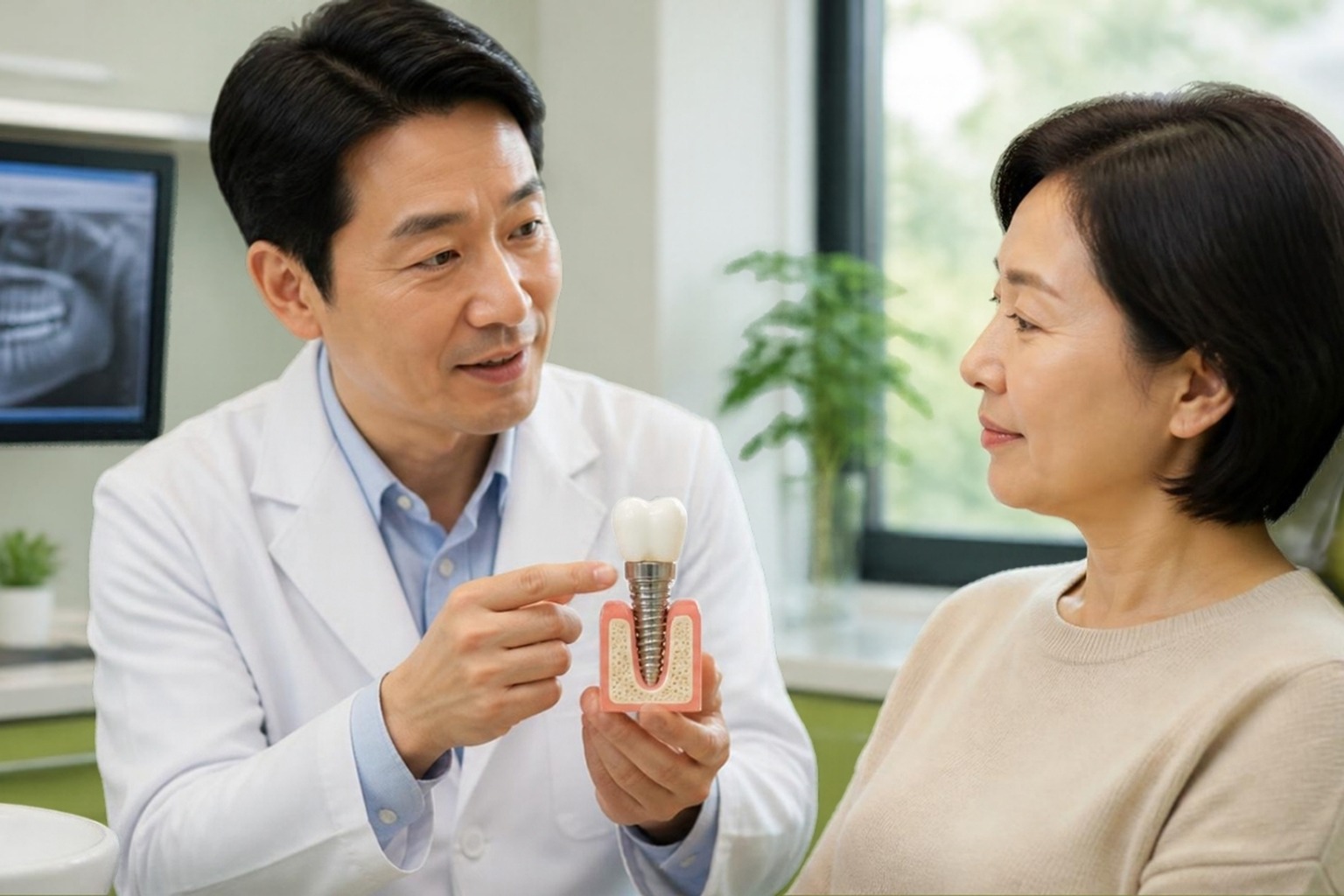
- Years of use and the need for replacement are separate questions. The fixture can remain in place while the crown needs repair.
- Survival measures whether implants remain in place. It does not mean there were no repairs or gum treatments.
- Tell your dentist about smoking and blood sugar control. Discuss interdental cleaning and arrange your next checkup.
- If you notice bleeding, swelling or looseness, contact the clinic rather than waiting for your scheduled checkup.
Implants do not have a fixed replacement age. Fusion of the fixture with bone is called osseointegration. The fixture, crown and surrounding tissues need separate assessment to decide whether treatment is needed.
The reviews below describe visits and checkups. Only the first explicitly mentions implant treatment; years of attending a clinic do not establish the lifespan of an implant.
01.How many years does an implant typically last? The root and crown differ
Studies with at least ten years of follow-up report long-term implant retention. A 2015 systematic review covered 23 studies and 7,711 implants, reporting a cumulative mean survival of 94.6 percent. The mean follow-up was 13.4 years.
This average cannot be converted into years remaining for an individual implant. Study populations and outcome definitions differ, and survival alone does not describe crown repairs or tissue health. A retained fixture can still have a crown that needs treatment.
One case from a visitor review
Father had an implant placed a couple of years ago and still attends regular checkups
여기 원장님 임플란트 실력 정말 좋으세요 아버님 재작년에 임플란트하시고 여전히 정기검진 잘받고있고, 너무너무 만족해하세요^^..English translationThe dentist here is really skilled with implants. My father had his implant done the year before last and is still getting regular checkups, and he's very, very satisfied.
Related readingComparing implant surgery methods: navigation, flapless, immediate placement and conscious sedation
Official sources for this sectionKDCA National Health Information Portal: Dental implant / Int J Oral Maxillofac Surg 2015 systematic review of dental implant survival at 10+ years (Moraschini et al.)
02.What shortens an implant's lifespan?
Smoking and poorly controlled diabetes affect treatment and care. The KDCA advises smoking cessation and blood sugar control. Report your medications, and discuss any adjustment with the prescriber and dentist rather than stopping them yourself before surgery.
Peri-implantitis involves inflammation around an implant with loss of supporting bone. Smoking and poor oral hygiene are risk factors. Significant damage may cause little looseness or chewing discomfort, so a lack of symptoms is not a reason to skip checkups.
One case from a visitor review
Booked a regular checkup together with scaling
정기검진 겸 스케일링 예약하고 다녀왔습니다. 전체적으로 깔끔하고 친절해요 만족합니다.English translationI booked a regular checkup along with scaling and went in. Everything was clean and the staff were kind; I'm satisfied.
Related readingScaling vs. periodontal treatment: what differs, and how insurance and recall intervals work
Official sources for this sectionKDCA National Health Information Portal: Dental implant
03.How should you take care of an implant to make it last?
Use floss or an interdental brush as well as a toothbrush. A mirror helps you check the tongue-facing surfaces that are easy to miss. Ask the clinic to demonstrate a suitable tool and size.
Care for the surgical site as instructed until stitches are removed. The KDCA gives advice on early meals and mouth rinse, and cautions against hard or chewy foods during the first year. It suggests checkups every three to six months after treatment.
One case from a visitor review
Has been coming for over a decade of regular checkups
십여년전부터 다니기 시작 원장님들 간화사 선생님들 모두 친절하구 마음에 드는 치과로서 정기검진 왔다갑니다English translationI started coming here over ten years ago. The dentists and the nursing staff are all kind, and I like this clinic, so I come in for regular checkups.
Related readingHow to check an implant follow-up plan
Official sources for this sectionKDCA National Health Information Portal: Dental implant
04.What are the signs that something is wrong with an implant?
Contact the clinic for bleeding on brushing, swollen gums or pus. New looseness or discomfort while chewing also needs assessment.
A loose sensation alone does not identify a screw, crown or fixture problem. Avoid repeatedly testing it with your fingers and have the dentist identify the affected component.
One case from a visitor review
Visited for a regular checkup without a reservation
치과 정기점검 받으러 방문했는데 예약없이 방문한 거 치곤 대기도 길지 않고 친절하게 안내해주셔서 좋았어요 다음에도 여기로 정기점검 올 것 같아요!English translationI came in for a regular dental checkup, and even though I visited without a reservation, the wait wasn't long and the staff explained things kindly, which I liked. I think I'll keep coming back here for regular checkups.
Related readingWhat to separate in an implant cost estimate
Official sources for this sectionKDCA National Health Information Portal: Dental implant
05.If you already have an implant, how much longer can it last?
The remaining years cannot be predicted precisely. Rather than replacing an implant solely because of its age, assess the gum, bone, crown and connecting components.
If you change clinics, bring past images and treatment records. They help compare changes in bone level and gum condition and plan the next checkup.
One case from a visitor review
Has been visiting the same clinic for years for treatment
몇년째 이용 중인 곳.
치료도 깔끔하게 해주심.
없어지지 않는 한 계속 다닐 생각임.English translationA place I've been using for several years now. The treatment is always done neatly. I plan to keep coming here as long as it's around.
Related readingHow to read registered dental specialist counts
Official sources for this sectionKDCA National Health Information Portal: Dental implant / Int J Oral Maxillofac Surg 2015 systematic review of dental implant survival at 10+ years (Moraschini et al.)
What is assessed at a checkup?
These topics connect your observations with clinical findings; they are not a self-scoring form.
| Criterion | Before the visit | At consultation | Interpretation limit |
|---|---|---|---|
| Implant age | Years since the procedure | When the root and the crown were each placed or replaced | If the root and crown were placed at different times, "how many years" needs to be split between the two. |
| Gum and bone condition | Noticed symptoms such as bleeding, swelling or pus | Pocket depth and any change in bone level compared with before | Peri-implantitis can destroy bone without noticeable symptoms, so symptoms alone cannot be reassuring. |
| Crown condition | Looseness, clicking sound, wear | Whether the screw loosened or the prosthesis itself is damaged | Treatment scope follows assessment of the cause of looseness. |
| Risk factors | Whether you smoke, have diabetes, or take certain medication | Whether these change the treatment or care plan | Smoking is described as having a direct correlation with implant failure. |
| Self-care | Current brushing and interdental-tool habits | A floss or interdental brush type suited to my tooth spacing | Implants can leave a wider gap between teeth, making floss and interdental brushes especially necessary. |
| Recall interval | The interval recommended last time | The interval that fits me and why it was set that way | Regular checkups every three to six months are advised even after treatment is complete. |
| Eating habits | How often you eat hard or chewy food | Whether there is a food to avoid given my current condition | For the first year after the procedure, starting with soft foods is especially recommended. |
What to verify
Ten questions to ask verbatim
- Does the survival figure you explained today refer to the root or the crown?
- How many years has my implant been in, and when was the root and crown each placed or replaced?
- How do my pocket depth and bone level compare with my last checkup?
- Is the looseness I feel from the crown, or from the implant root itself?
- Do risk factors such as smoking or diabetes affect my treatment or care plan?
- What floss or interdental brush type suits my own tooth spacing?
- What recall interval in months is recommended for me, and why was it set that way?
- Is there any food or chewing habit I should avoid right now?
- Is there a way to check now whether I might have peri-implantitis even without symptoms?
- Is surgery needed just because it has been used a long time, or is it fine to keep watching it?
FAQ
FAQ
Can an implant last a lifetime?
Lifetime use cannot be guaranteed. Long-term survival describes groups of patients and implants, not a personal replacement date. Ask whether a lifespan figure refers only to fixtures remaining in place or also accounts for crown repairs and gum treatment.
Can cavities form on an implant?
The artificial implant itself does not get cavities. Surrounding gums can become inflamed, and neighboring natural teeth still need cavity prevention. Clean the whole area, including the spaces beside the implant and the surfaces facing the tongue, rather than focusing only on the implant.
How can peri-implantitis actually be checked for?
The dentist assesses bleeding, probing depths and bone on images. Earlier images allow changes in bone level to be compared. Tell the clinic about previous gum treatment, and ask which current findings support the recommended treatment instead of relying on how the implant feels.
Is regular brushing alone enough around an implant?
Use floss or an interdental brush where a toothbrush cannot reach between teeth. Do not force an oversized tool into a gap. Ask the clinic to demonstrate a suitable size and technique, and show what you use at home so it can explain which areas you may be missing.
Should smokers avoid getting an implant?
Tell your dentist that you smoke and how much. The KDCA recommends quitting because smoking is associated with implant failure. Treatment suitability needs assessment of oral and general health. Discuss a cessation plan and follow-up care with your dentist before proceeding.
If it's been a long time with no symptoms, is that fine?
Keep planned checkups even without discomfort. Years of use alone do not determine replacement; the dentist assesses the tissues and restoration. If you change clinics, provide the placement date and past treatment history, including any screw or crown repairs.
If the crown feels loose, does the implant need to be redone?
A loose crown alone does not establish a need for reimplantation. Treatment depends on which part is affected: the screw, crown or fixture. Avoid repeatedly testing it with your fingers, and tell the dentist when it started and whether it has been repaired before.
Does the checkup have to be exactly every three to six months?
Three to six months is the interval given by the KDCA. Your clinic sets the actual date using your condition and risk factors, so contact it before changing the appointment. If bleeding, swelling or looseness appears in between, seek advice rather than waiting for routine recall.