Common dental decisions · DENTALVIEW GUIDE
Clinic whitening vs. home whitening: what's the difference, and what about side effects?
Compare office and dentist-prescribed tray whitening, including treatment, effects, costs, sensitivity and restoration shade differences.
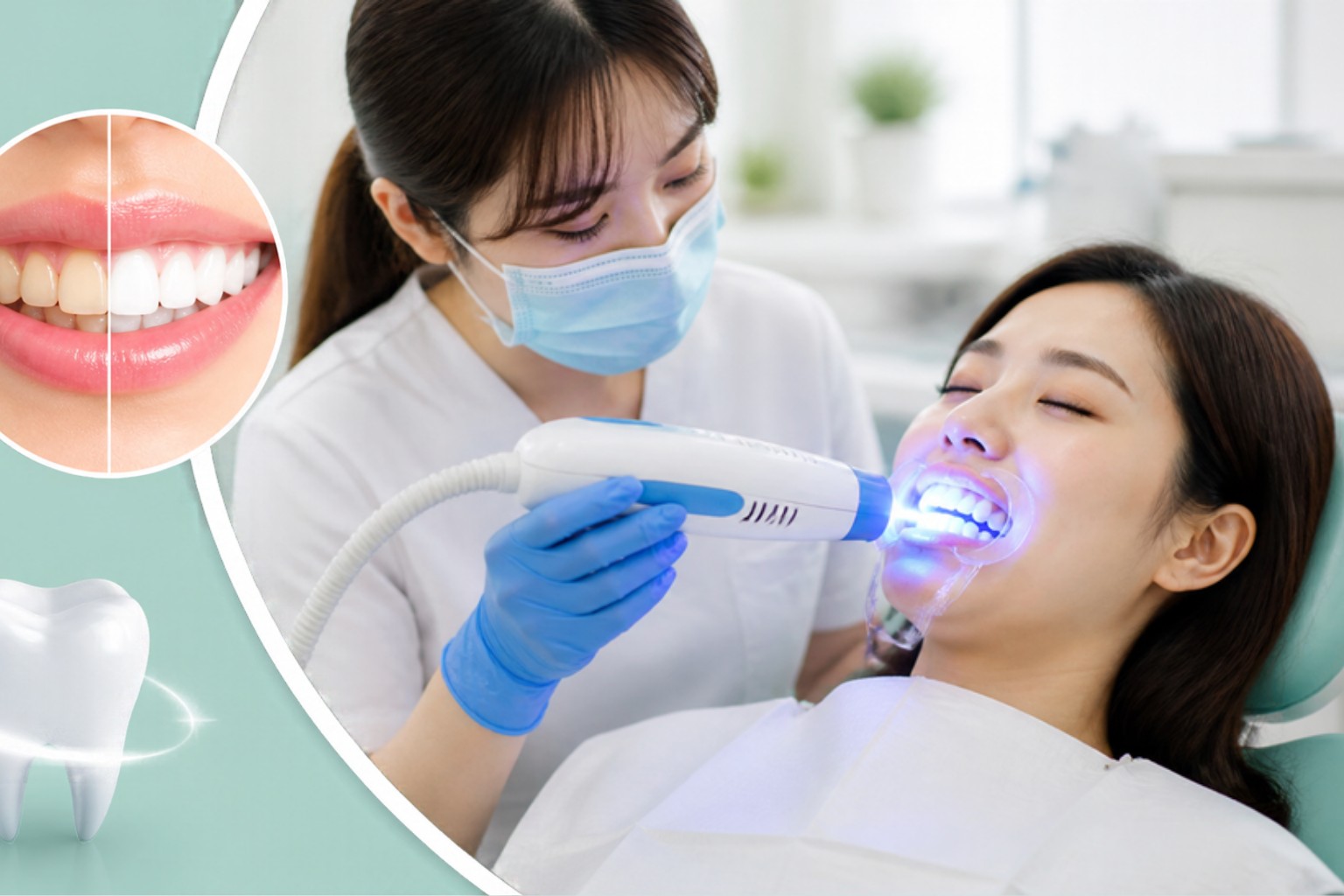
- Ask about in-office whitening for quicker change, or a dentist-made tray for gradual treatment at home. Cost depends on the product and number of sessions.
- Both methods use peroxide-based agents, but concentration and application time vary by product. Dentist-made trays and over-the-counter products are different options.
- Temporary sensitivity and gum irritation are common side effects. Stop treatment and contact your dentist for severe sensitivity or gum injury.
- Crowns, laminates and resin fillings do not whiten with bleaching gel, so a color difference from your natural teeth can appear. Check this with your dentist before whitening.
Whitening uses peroxide-based agents to break down pigments in enamel and dentin. Options include in-office treatment, dentist-prescribed home trays and over-the-counter strips or gels. This guide compares the first two.
The reviews below are individual experiences with their visit dates shown. Their reported color change or sensitivity does not predict everyone’s outcome.
01. How does professional in-office whitening work?
In-office whitening applies gel after protecting the lips, cheeks and gums. SNUH describes a protocol using 15% hydrogen peroxide and light, but concentration, contact time and light use depend on the product.
The starting shade and desired change determine the number of sessions; sensitivity may require a change in interval or concentration. Yellow discoloration generally responds better, while gray discoloration or a non-vital tooth needs separate assessment.
One case from a visitor review
Had professional whitening and was also told the precautions to follow
치아 미백 여러번 해봤지만 여기가 최고네요. 한번으로도 엄청 하야져서 거울 볼때마다 기분이 좋네요. 주의사항 꼼꼼히 알려주셨고 다음날 확인 전화도 해주시네요. 여자 원장님이라서 그런지 꼼꼼하고 자상하신거 같아요. 위생사 선생님들도 아주 친절하십니다~English translationI've had teeth whitening several times, but this place is the best. Even one session made my teeth so much whiter, and I feel great every time I look in the mirror. They explained the precautions carefully and even called the next day to check on me. Maybe because the director is a woman, she seems thorough and caring. The hygienists are also very kind.
02. How does a take-home whitening tray work?
For home tray whitening, the dentist makes a fitted tray and prescribes how much gel to use. Hydrogen peroxide or carbamide peroxide may be used; follow the prescribed wear time and treatment period. Do not extend wear time to intensify treatment.
Retail strips and gels have different designs and instructions from fitted trays. Follow authorized product instructions and do not self-apply professional high-concentration gels. Have a poorly fitting or leaking tray checked, and avoid swallowing the gel.
03. How different are the effect and how long it lasts between in-office and home whitening?
Professional whitening feels fast because you can notice a change after just one session, while home whitening brightens gradually since the lower-concentration gel needs to be repeated. The final shade reached, though, often depends more on the tooth's original color and the cause of discoloration than on speed.
Coffee, tea and smoking can cause new staining, so whitening is not permanent. SNUH reports long-term retention figures, but these do not guarantee a duration for any product or person. Surface stains may first be addressed with professional cleaning and polishing.
One case from a visitor review
Managing coffee-related staining with regular whitening
커피를 달고 살아서 그런지 치아가 누렇다는 얘기를 듣고 스트레스도 많이 받았었는데 여기서 치아미백하고 나서는 확실히 밝아진게 눈에 보이니까 제 스스로도 너무 뿌듯해요 커피를 줄일수는 없으니까 주기적으로 와서 미백받을게여ㅎㅎEnglish translationMaybe because I drink coffee all the time, people kept telling me my teeth look yellow, and it really stressed me out. But after whitening here, I can clearly see they got brighter, and I'm so proud of myself. I can't cut down on coffee, so I'll keep coming back for whitening regularly.
Related readingScaling and health insurance: how often can you get it covered?
04. How much sensitivity or side effects show up after whitening, and how?
Temporary sensitivity and gum irritation are the most common adverse effects. SNUH describes sensitivity in about 67% of patients, usually resolving within 48 hours; frequency varies with the product and concentration. Do not continue through severe sensitivity just to finish a course.
A 2010 study compared 37 people receiving a 30% hydrogen peroxide product with 34 controls. Its temporary mild pain and electric pulp-test findings do not establish that every product is harmless. Stop use for red or injured gums as well.
One case from a visitor review
Had whitening multiple times and noticed how much sensitivity it caused
충치 치료받고 미백치료도 받았어요! 친절하셨고 아프지도 않았어요 미백은 3회 했는데 별로 안시리고 만족해요!!English translationI had a cavity treated and also got whitening done! The staff were kind and it didn't hurt. I did whitening three times and barely felt any sensitivity, so I'm satisfied.
One case from a visitor review
Was personally told about the risk of overdoing whitening
스케일링 미백 주기적으로 받고 있는데 꼼꼼히 시술해주시고 매번 때되면 안내문자로 챙겨주셔서 정기적으로 검진도 잘 받고 있어요. 미백 많이하면 안좋은데 그런 것도 주의주시고, 만족도가 아주 높습니다.English translationI get scaling and whitening on a regular schedule here, they're thorough with the procedure, and they always text me when it's time, so I keep up with regular checkups too. They also warn me that doing too much whitening isn't good, and I'm very satisfied overall.
05. Does having a crown or laminate mean whitening won't work?
Bleaching lightens natural teeth but does not change the color of crowns, veneers or resin restorations. An existing front-tooth restoration can therefore look different after whitening.
When planning a front-tooth resin restoration or replacement crown, finish whitening and allow the shade to settle before shade matching. SNUH recommends waiting about two weeks for resin filling, but decay and restoration condition determine the actual sequence.
Related readingCavity treatment: should you choose resin or an inlay? / Questions for reading a crown material table
What should you check when choosing a whitening method?
Compare the desired speed of change with the condition of your teeth.
| Criterion | Before the visit | At consultation | Interpretation limit |
|---|---|---|---|
| How fast you want to see change | Think ahead about whether an important date is coming up | Ask which method the clinic recommends for you | Office treatment aims for quicker change; total cost depends on sessions and products. |
| Whether your teeth are usually sensitive | Tell the dentist about sensitivity to cold water | Ask whether your teeth and gums can be checked before whitening | If sensitivity is present, check the cause first instead of starting with whitening. |
| The cause of the staining | Think about surface-staining habits such as coffee, tea or smoking | Ask whether scaling alone could already improve it | If surface staining is the main cause, scaling alone can already make teeth look cleaner. |
| Whether you have a restoration | Check whether a front or visible tooth has a crown, laminate or resin filling | Ask how much color difference to expect after whitening | Restorations do not whiten with bleaching gel, so a color gap from natural teeth can appear. |
| Gum condition | Check whether gums swell or bleed | Ask whether periodontal treatment is needed first | If there is inflammation, it needs to be treated before whitening. |
| Cost and number of sessions | Think ahead about your budget and how many visits you can make | Ask how many sessions are needed for your target shade and the total cost | Even in-office whitening can require several sessions depending on the target shade. |
| A plan for maintaining the result | Think about how well you can avoid staining food after whitening | Ask about a return-visit interval or extra care to maintain the result | The effect is not permanent, and how long it lasts depends on your habits. |
What to verify
Ten questions to ask verbatim
- Given my teeth, which fits better, in-office or home whitening?
- I currently have sensitivity. Can I still start with whitening?
- Is my staining on the surface, or is it the tooth's own color?
- Is there a part that could already improve with scaling alone?
- I have a crown or resin on a front tooth. How much color difference will whitening cause?
- About how many sessions will it take to reach the shade I want?
- How long and how often each day should I wear the home whitening tray?
- How should I manage it if sensitivity appears after whitening?
- How long does the whitening effect usually last?
- If I need a resin filling, is it better before or after whitening?
Both professional and home whitening work by breaking down pigment with hydrogen peroxide, but they differ in concentration and speed. At your visit, mention whether your teeth are usually sensitive, what's causing the staining, and whether a front tooth has a restoration, then ask specifically which method fits your situation better and how many sessions and what cost to expect.
FAQ
FAQ
Which is more effective, in-office or home whitening?
Office whitening is applied in shorter sessions; prescribed trays are used repeatedly at home. Final shade depends on the stain, product and duration. Compare the expected shade and total cost.
How long does sensitivity last after whitening?
Sensitivity is generally temporary, but the duration varies. Avoid very cold or hot food and contact the dentist before another application if pain is severe or persists. Fluoride treatment or a concentration change may be needed.
Is a home whitening tray the same as a drugstore whitening strip?
No. A dentist-made tray is fitted to your teeth with prescribed gel and wear time. Retail strips and gels have their own instructions; do not combine products or exceed their stated application time.
If I have a crown or laminate, can I not get whitening done?
You can still get whitening, but because the gel only works on pigment in natural tooth enamel, parts covered by a crown, laminate or resin won't brighten. That means a color gap can appear between natural teeth and the restoration after whitening. If you're planning a new restoration or a color match, discuss with your dentist finishing whitening first, letting the color settle, and then deciding the restoration's shade.
Can I whiten at home with lemon juice or baking soda?
Avoid rubbing teeth with lemon juice or vinegar; strong acids erode enamel. Rubbing on baking soda is different from using a formulated toothpaste with controlled abrasiveness. Removing surface stains is also different from bleaching the natural tooth color.
How long does the whitening effect last?
It is not permanent. SNUH reports color-retention figures of 74% at two years, 62% at four and 35% at seven, without detailed study population or measurement criteria on that page. These figures cannot predict an individual duration; arrange maintenance according to re-staining.
My teeth are naturally on the yellow side. Will whitening work well for me?
Yes, it tends to work relatively well. According to Seoul National University Hospital's medical information, yellow or orange-toned discoloration responds well to whitening, while gray or blue-toned discoloration, such as from nerve damage, improves comparatively less. Because the effect you can expect depends on the cause and shade of discoloration, it's best to have the cause checked at a clinic before whitening.
Can I get whitening while pregnant or during orthodontic treatment?
The NHS recommends deferring whitening during pregnancy and breastfeeding. With braces, exposed and covered areas may whiten differently, so agree the timing with the orthodontist. Report peroxide allergy, decay or gum inflammation before treatment.