Common dental decisions · DENTALVIEW GUIDE
TMJ disorder: what are the symptoms and how is it treated?
Jaw clicking or pain when chewing: painless sounds, examination, splints, surgery and when to seek urgent care.
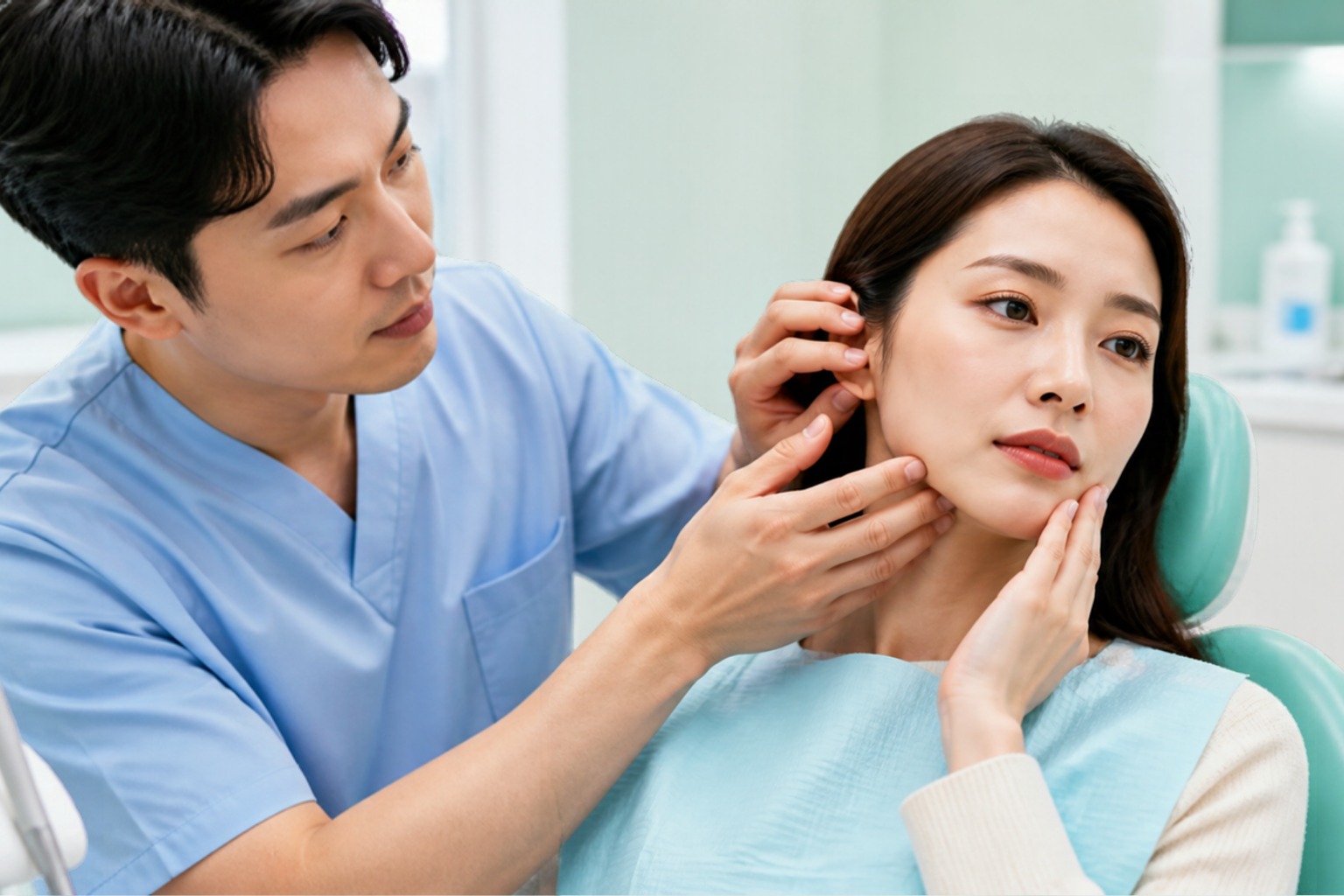
- Pain near the ear or jaw when chewing and difficulty opening the mouth can suggest TMD. An examination distinguishes it from dental or ear conditions.
- Painless clicking without limited movement is common and usually does not need treatment.
- Start with simpler care suited to the diagnosis, rather than procedures that permanently change the teeth or jaw.
- Seek same-day advice for sudden locking or severe pain after injury. Breathing or swallowing difficulty needs emergency care.
TMD covers pain and movement problems affecting the jaw joints and chewing muscles. Jaw pain has several causes, so the examination assesses symptoms, joints and muscles separately.
The quotations below describe visitors’ experiences, not examination records or evidence of treatment effectiveness.
01. What symptoms does TMJ disorder cause, and why does it happen?
Pain or aching around the ear and chewing muscles can increase with jaw movement. Opening may be limited, the jaw may lock, or joint sounds may be painful.
Injury, clenching, sleep and psychological factors may contribute. NIDCR reports that evidence does not support a strong link between malocclusion and TMD, so an uneven bite alone does not establish the cause.
One case from a visitor review
Visited the clinic because of a teeth-grinding problem
이갈이 문제가 있어서 왔는데 너무 친절하시고 편하게 진료 받고 갑니당 3개월 뒤에 또 올게욤 ㅎ_ㅎEnglish translationI came in because of a teeth-grinding problem, and everyone was so kind and I had a comfortable visit. I'll be back in 3 months.
02. How can you self-check at home, and how does the clinic diagnose it?
The clinician asks when pain began, what worsens it and whether there was an injury, then examines tenderness, jaw opening and joint sounds. X-rays or MRI are selected for the suspected problem.
The next review concerns Botox for teeth grinding. It does not establish a TMD diagnosis or treatment benefit. NIDCR describes the effectiveness of botulinum toxin for TMD symptoms as uncertain.
One case from a visitor review
Had jaw Botox for a teeth-grinding problem and was diagnosed with an X-ray
이갈이 문제로 턱 보톡스 맞았고 안아팠어요
엑스레이 찍어서 문제있는곳 진단해주시는거 정확하고 과잉진료 없어서 정기검진 받으러 갑니다English translationI had jaw Botox for a teeth-grinding problem and it didn't hurt. They take an X-ray and diagnose the problem area accurately without unnecessary treatment, so I go back for regular checkups.
03. How is TMJ disorder treated?
Initial care reduces excessive jaw loading: avoid hard or chewy foods and gum, and reduce clenching. Heat, exercises, medication and physical therapy are selected after assessment.
A splint can protect teeth or assist habit management, but it does not reliably relieve every type of TMD pain. NIDCR notes limited evidence for pain improvement and advises stopping use and contacting the clinician if pain increases.
NHIS guidance mentions considering occlusal adjustment after insufficient conservative care. NIDCR, however, states that evidence for permanently changing teeth or the bite to treat TMD is insufficient and that symptoms can worsen.
Occlusal adjustment is therefore not a routine next step. Joint lavage and surgery are separate decisions based on the joint disorder and functional limitation, not pain duration alone, and require specialist assessment.
The next visitor selected implant/TMJ follow-up as a visit-purpose tag. The written review concerns staff and fee explanations, and does not identify the TMD treatment or its outcome.
One case from a visitor review
Had TMJ treatment following implant treatment
의사 선생님 은 참 친절 하시고 전문가 의 포스 가 느끼집니다 but 안내 해주고 가격 설명 해주는 분은 너무 병원 에서 월급 주시는데 기여 를 충분 히 기여 하시는것 같아요
자주 갈수록 너무 피곤해 지네요 그래도 치과 치료 잘해주시네요 류 원장 님 짱English translationThe doctor is very kind and gives off an expert vibe, but the staff member who explains the fees seems to be doing more than enough to earn their salary from the clinic. It gets tiring the more I visit, but the dental treatment itself is good. Dr. Ryu is the best.
04. What should you ask before getting a splint?
Ask which symptom the device targets, how long to wear it and when it will be adjusted. Ask whether it is intended to permanently change your bite.
NHIS lists appliance types and adjustment, relining and reconstruction as non-covered items. Ask whether the quoted fabrication price includes adjustment or replacement.
The following two reviews concern appliance explanations and routine appointments. An easy booking experience does not establish same-day emergency availability.
One case from a visitor review
Satisfied with oral medicine care but felt the splint explanation was lacking
구강내과 담당의는 친절하신데
스플린트에 대한 설명이 부족한 점 아쉽네요.
진료 끝나고 주의사항 안내 및 예약 해주시는 간호사 너무 불친절해서 병원을 방문 할 때마다 불쾌합니다.
대학병원에서 직원 관리에 신경을 써주세요.English translationThe oral medicine doctor was kind, but it was disappointing that the splint explanation was lacking. The nurse who handles aftercare instructions and booking after treatment is so unkind that it's unpleasant every time I visit. Please manage staff better at the university hospital.
One case from a visitor review
Felt booking was relatively easy even at a university hospital
항상 친절하고 진료도 잘 봐주심. 대학병원인데 예약도 비교적 수월한 편.English translationAlways kind and the care is good. It's a university hospital, but booking is relatively easy.
05. When should you see a dentist right away?
Seek same-day care if the jaw suddenly locks open or closed. Severe pain after injury, or facial swelling with fever, also needs prompt assessment.
If swelling makes breathing or swallowing saliva difficult, seek emergency care rather than waiting for a dental appointment. In Korea, call 119.
What should you check when TMJ disorder is suspected?
Items to check at the dental clinic, from symptoms to treatment.
| Criterion | Before the visit | At consultation | Interpretation limit |
|---|---|---|---|
| Pain location and timing | Whether jaw, pre-ear or temple pain worsens with chewing or jaw movement | When the pain started and how long it has lasted | Explain effects on eating and sleep as well as pain duration. |
| Joint sounds | Whether clicking or grating sounds occur when opening or closing | Whether pain or limited movement accompanies the sound | Sound alone cannot indicate severity, so accompanying symptoms must be checked. |
| Limited movement | Whether opening is limited or side-to-side movement is asymmetric | How much less the mouth opens than usual | If the jaw suddenly locks and cannot open or close, see a clinic immediately. |
| Grinding or clenching habits | Whether the jaw feels stiff on waking or teeth feel worn | Whether the habit occurs during sleep or during the day | Ask whether a splint is needed along with correcting the habit. |
| Diagnostic exam | Whether jaw movement, tenderness and joint sounds were examined, and whether imaging is needed | Whether diagnosis relied only on the checklist | The self-check list is a reference only and cannot alone confirm a diagnosis. |
| Treatment choice | Previous care and its duration | Purpose and risks of the proposed treatment | Permanent bite changes are not an automatic next step. |
| Non-covered cost | Whether items like the splint or impression are non-covered | Whether cost differs by appliance type (stabilization, immediate anterior repositioning, soft stabilization, anterior repositioning) | Non-covered fees differ by clinic, so confirm before treatment. |
What to verify
Ten questions to ask verbatim
- Can you confirm whether my symptoms fit TMJ disorder or come from another cause?
- Is grinding or clenching the main cause in my case, or are other factors involved?
- Do I need imaging such as an X-ray or MRI now, or should we revisit after conservative treatment?
- Which treatment stage should I start with, and can I begin with exercise and physical therapy?
- If I need a splint, is it worn only at night, and which type is right for me?
- Is the splint non-covered, and are adjustment or remaking fees separate?
- What should I watch for day to day to correct grinding or resting on my chin?
- How often and for how long should I continue physical therapy or medication?
- When should I come back if symptoms don't improve or get worse?
- Will this permanently change my teeth or bite, and what alternatives are there?
At your visit, describe when pain began and how chewing or opening changes it. If an appliance is proposed, ask its purpose, cost and follow-up schedule.
FAQ
FAQ
If my jaw only clicks without pain, is that okay?
Painless sounds without movement problems usually need no treatment. Seek an examination if pain or locking develops.
Can TMJ disorder be self-treated at home?
Mild discomfort can improve with self-care, but persistent pain or difficulty eating or opening the mouth needs assessment.
What happens if TMJ disorder is left untreated?
Not every case progressively worsens. Recurrent pain or limited movement warrants assessment and care for symptoms affecting daily life.
Should I go to a dentist or an ENT doctor for TMJ disorder?
For pain with jaw movement or limited opening, ask an oral medicine or oral surgery clinic. Suspected ear disease also requires an ENT assessment.
Is stress the main cause of TMJ disorder?
Stress is one of several interacting factors. Tell the clinician about sleep, clenching and how pain affects daily life.
Is a splint always necessary?
Not everyone needs a splint. Ask why it is proposed for your symptoms, what benefit is expected and what to do if pain increases.
When is TMJ surgery performed?
The joint diagnosis, functional impairment and response to earlier care guide the decision. Tooth-grinding occlusal adjustment and joint surgery are different procedures.
Does insurance cover TMJ disorder treatment costs?
Coverage in Korea depends on the service. Splints are listed as non-covered; ask separately about fabrication and adjustment fees and coverage of other services.